Hybrid and Composite Animals
In medieval texts and manuscript illustrations, many animals are peculiar mixtures of two or more other animals, sometimes producing a beast that could not possibly exist (a composite), sometimes producing offspring that could potentially exist (a hybrid). The modern concept of "species", groups of of animals that can not or do not interbreed, was not understood in the middle ages, so the mixing of unrelated animals seemed no less likely than ordinary breeding, where it was known that natural variations could produce offspring with an appearance not exactly like the parents.
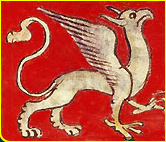
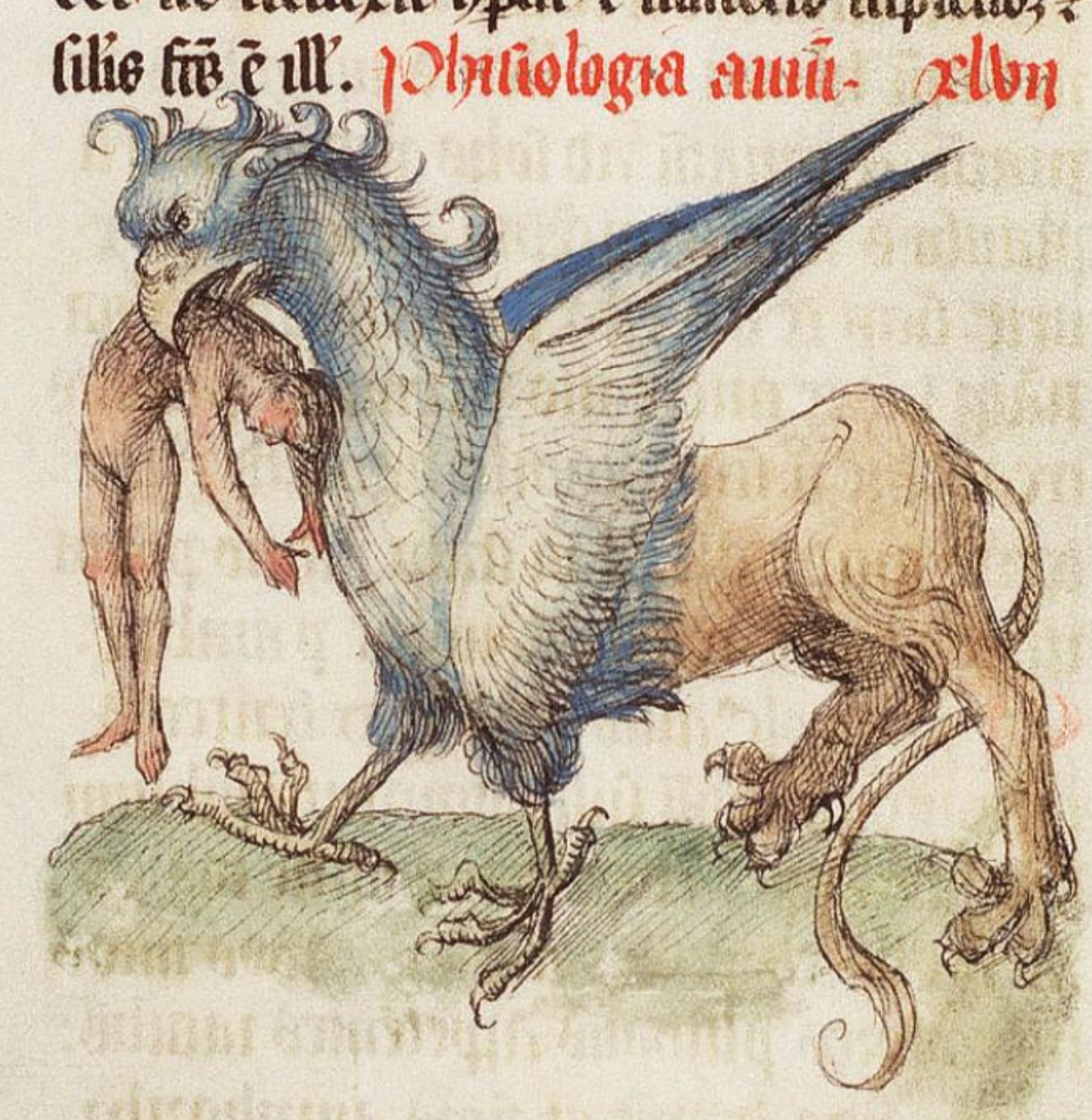
True composite animals are constructed from parts of two or more other, usually unrelated, animals. These are impossible animals that could not physically exist, such as a griffin (eagle + lion) or a harpy (human + bird). Whether medieval writers believed they actually existed is dubious. A selection of these composite beasts is shown below.
Some hybrid animals are produced by natural means, through the mating of distinct but related animals. For example, the leopard is the result of a mating between a lion (leo) and a pard; both are cats and their offspring are also cats.
In some cases the animal's name suggests that it is a composite, but it is not. For example, the giraffe is called the cameleopard, suggesting it is a composite of a camel and a leopard, but it is actually described as resembling a camel but with spots on its skin like a leopard. Some names are ambiguous: in one form the ant-lion is a composite of a lion and an ant, while in another form it is said to be the "king of ants", merely a very large ant that preys on other ants.
Some animals may seem to be hybrids but are actually their own distinct species. One of these is the unicorn, appearing to be a horse with a horn, but it (and its cousin, the monocerus) is not the result of mixing two species - it is a horse-like (or goat-like) animal species that happens to naturally have a horn, just as a stag has antlers.
Animals that are part human (onocentaur, mermaid, siren, harpy) are particularly problematic. Are they fully animal, or partly human? Is the human part sentient, able to reason like a human, or just a brute, unthinking beast? Do they have souls, and if so, can they be admitted to heaven? The illustrations of these semi-human creatures suggest some unease among the medieval artists. Almost always, the human part and the animal part are clearly and distinctly divided, often with a separator like a roll of flesh, a hairy ruff or a belt between them. In many illustrations the human part fits into the animal part, like the human is not quite connected to the animal, or is wearing the animal part like a costume. In general, medieval authors seem to think that these creatures are animals, with the "human" part merely resembling a human while not really being one. Of the siren, Bartholomaeus Anglicus (Liber de natura rerum, 6.45) says:
Most people, however, and almost all the philosophers and even some of the expositors of the saints, disagree with Isidore, saying that we believe that the sirens are in truth monsters of the sea. Hence in truth we believe that they are monsters of the sea, but they are irrational: but the song is to be believed not articulated, to be distinguished by syllables and words, but certainly not distinguished by articulations like the song of birds.
Of the onocentaur Thomas of Cantimpré says (Liber de natura rerum, 4.82):
The onocentaur ... is a monstrous animal ... Onocentaurs sound as if they are beginning to speak as they utter their voice, but their unaccustomed lips can not form a human voice. Andelmus the philosopher says that this monster was not created as such from the beginning of creation among other beasts, but wherever and whenever it is seen in any part of the world, it is born from the adulterous mixture of a man and a bull, or a man and a horse.
The list below describes and illustrates some of the most obvious composite animals; there are others that are ambiguous or marginal.


Ant-lion
The ant-lion is depicted in two ways. The first (and most common) interpretation is of a large ant that preys on other ants; this form is not a hybrid. The second interpretation is as a composite of a lion and an ant, showing the front half of a lion awkwardly joined to part of an ant, with a distinct division between the two parts.


Centaur
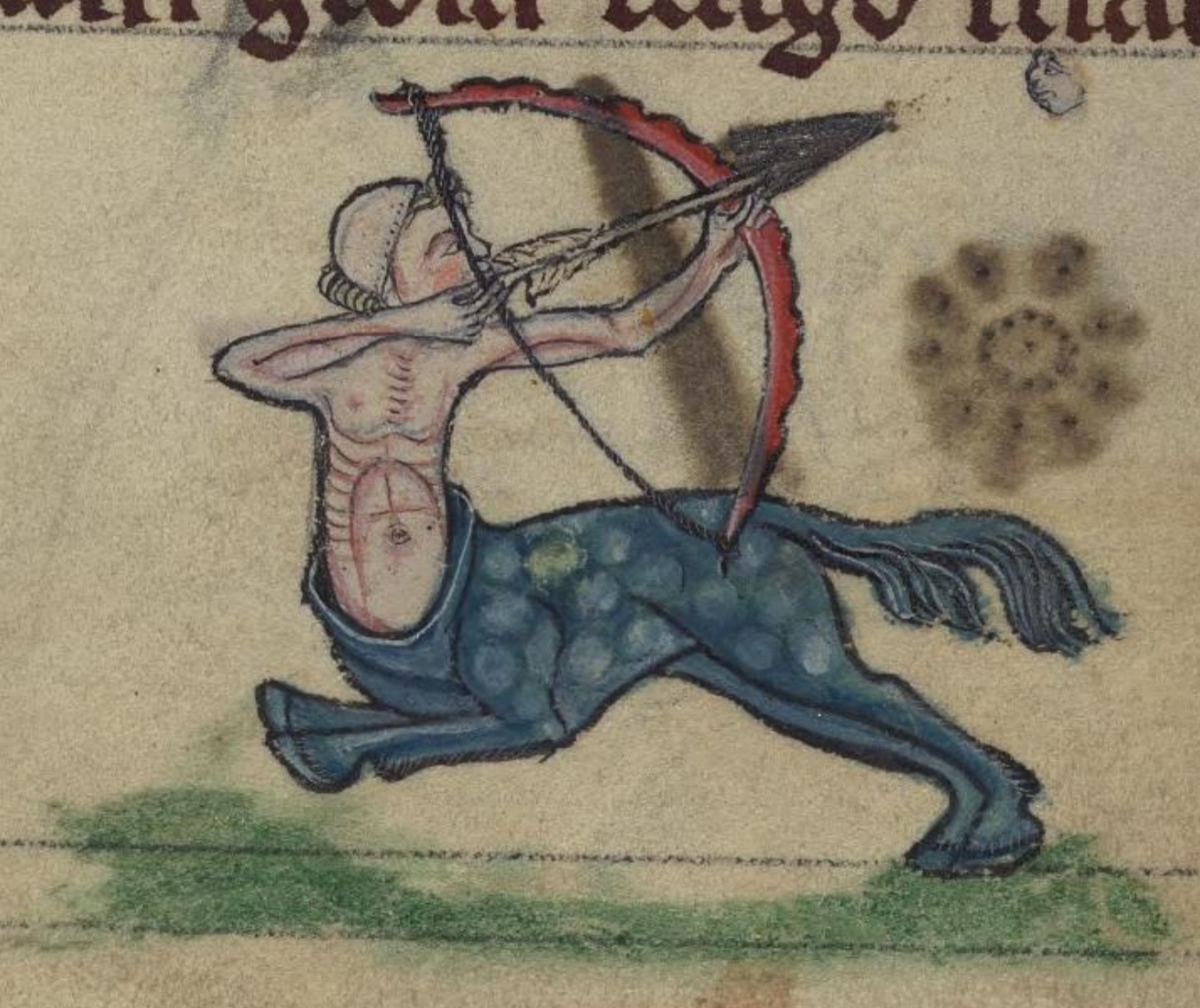
The centaur has the body and legs of a horse and a human (usually male, sometimes female) torso and head. The illustrations almost always show a distinct division between the human part and the horse part, making it look like the human is wearing horse body, rather than being a whole animal. Occasionally the horse part has wings.
Ceruleum
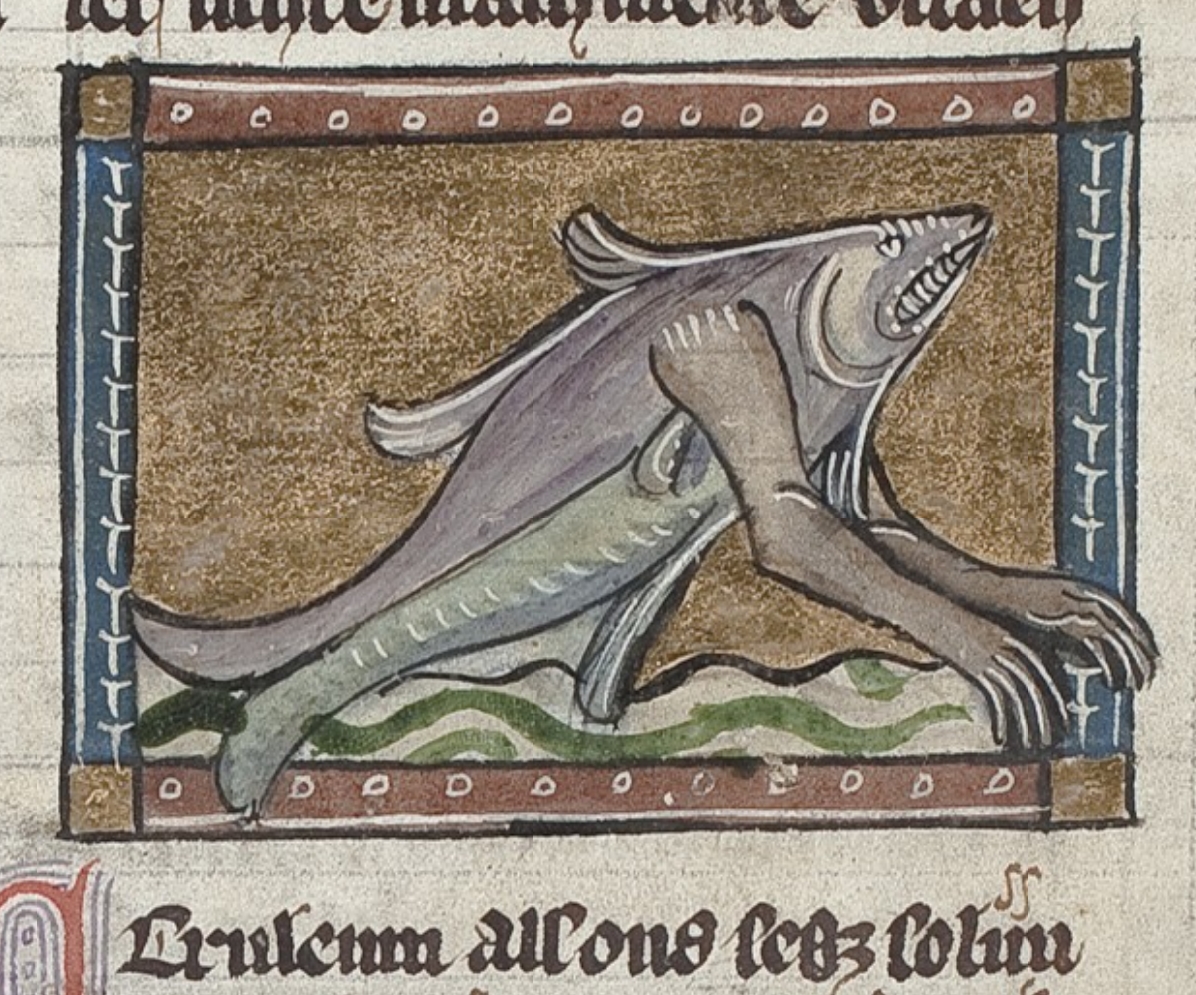
The ceruleum is a fish with two human arms which it uses to pull prey from the shore into the water. The arms are usually attached the "shoulders" or front of the fish.
Draconcopede
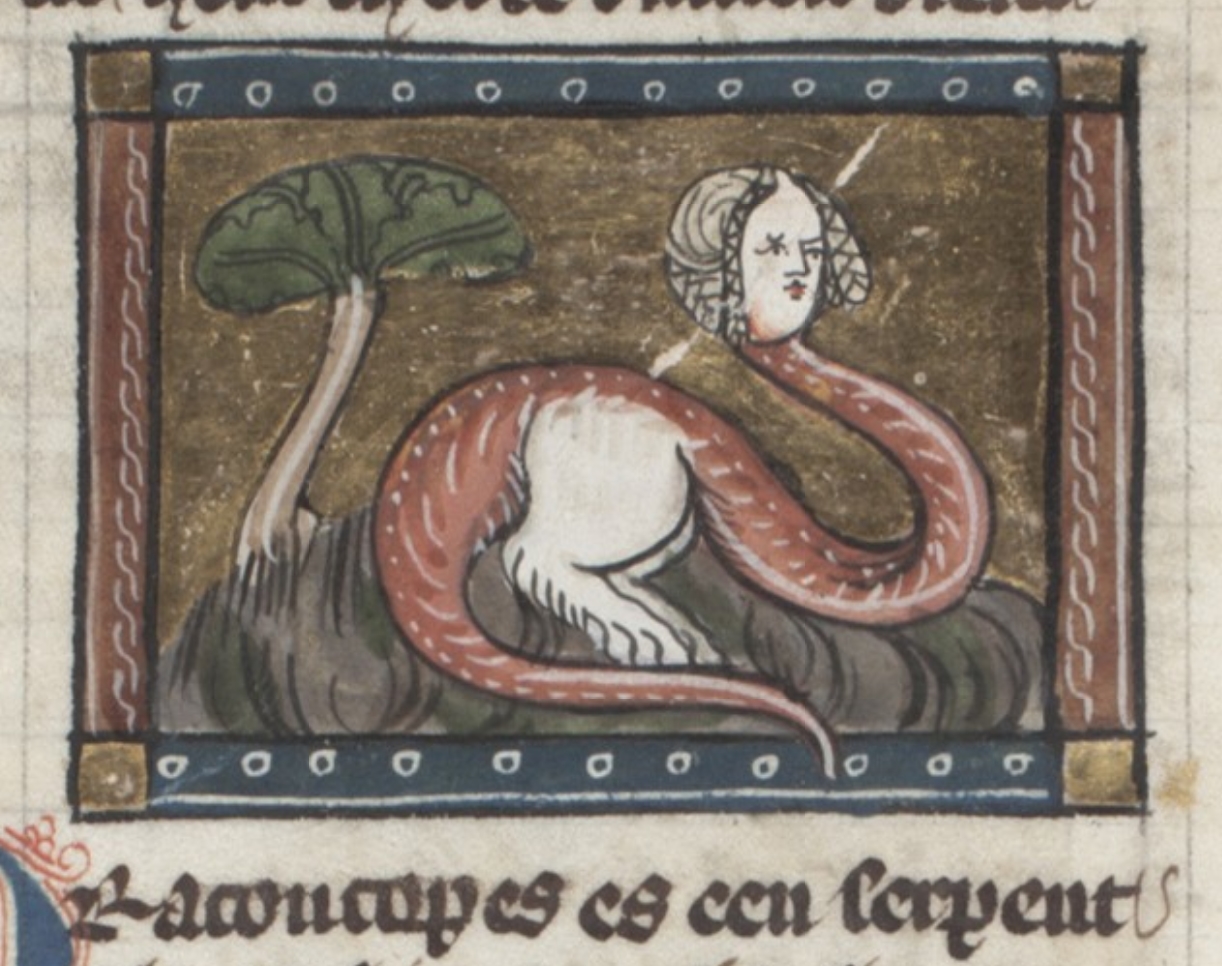
The draconcopede is a snake or a dragon with the head of a woman. It is often used to represent the serpent that tempted Eve in the garden of Eden. In most illustrations the woman's head is perched awkwardly at the end of a long neck. Sometimes there is a human torso between the human head and the snake body; occasionally it has arms or wings.
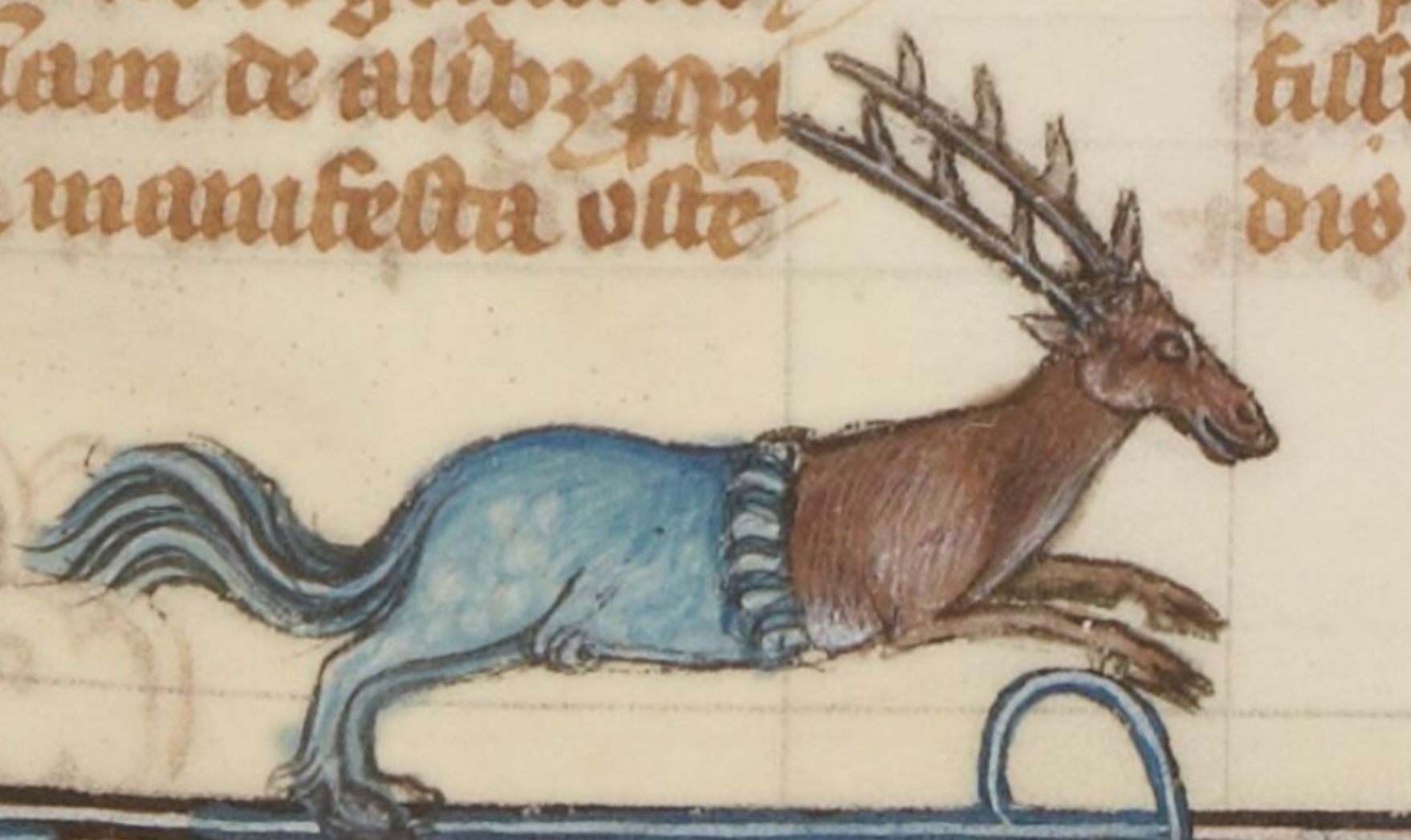
Equicervus
The equicervus is a composite animal, with the back half of a horse (equis) and the front half of a stag (cervus). In this illustration the two parts are divided by a hairy belt. Some illustrations show a horse with antlers.
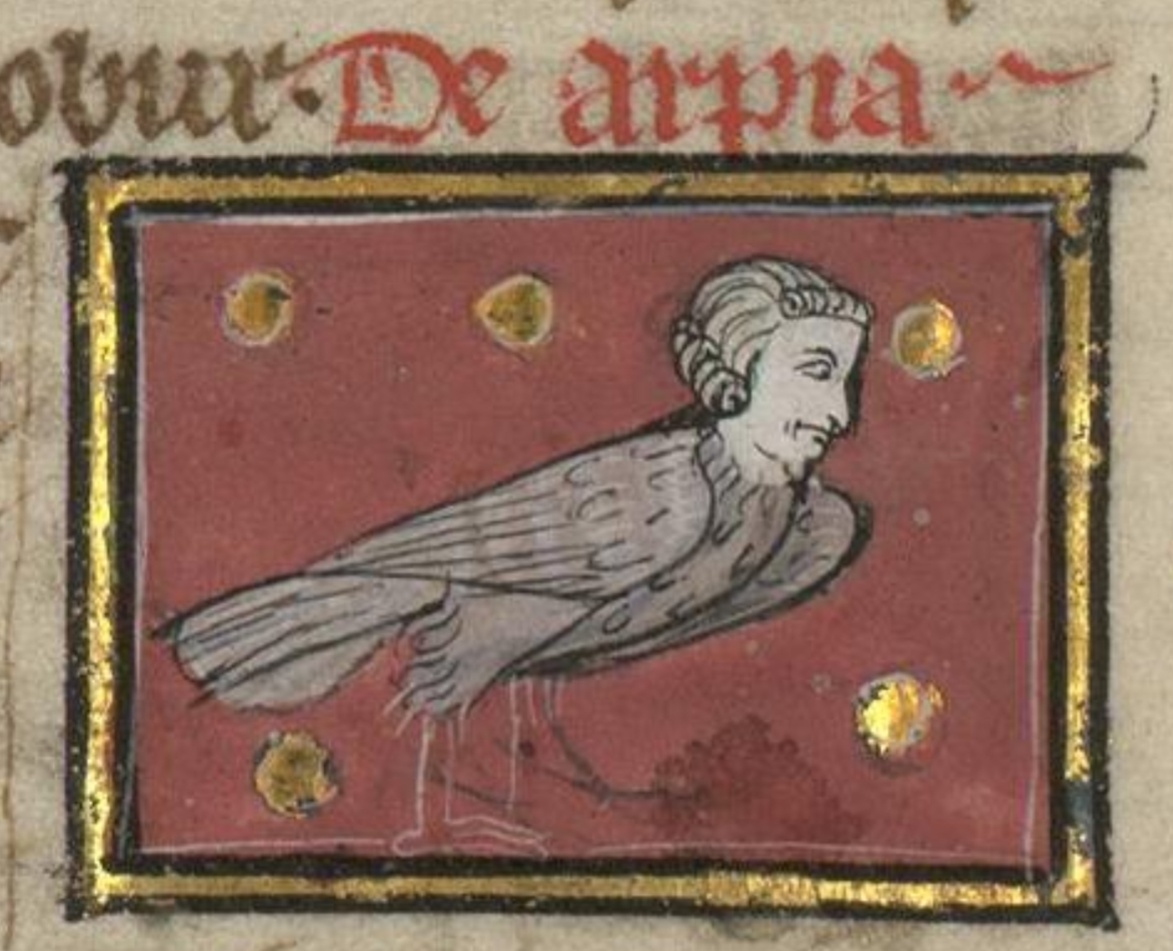
Harpy
In Greek mythology, the harpy is a bird with head of a woman. In medieval manuscripts the head is often male, or at least androgynous like this one.
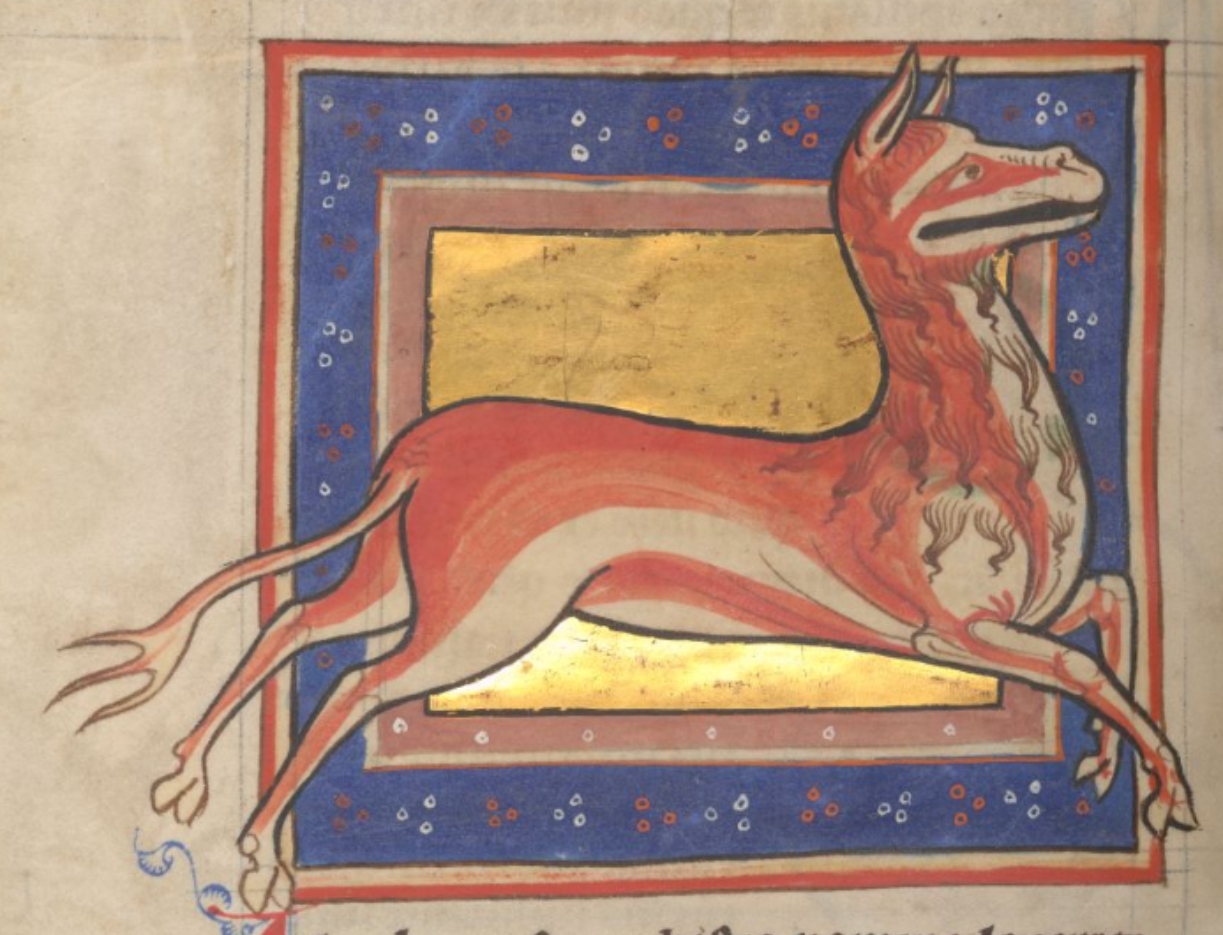
Leucrota
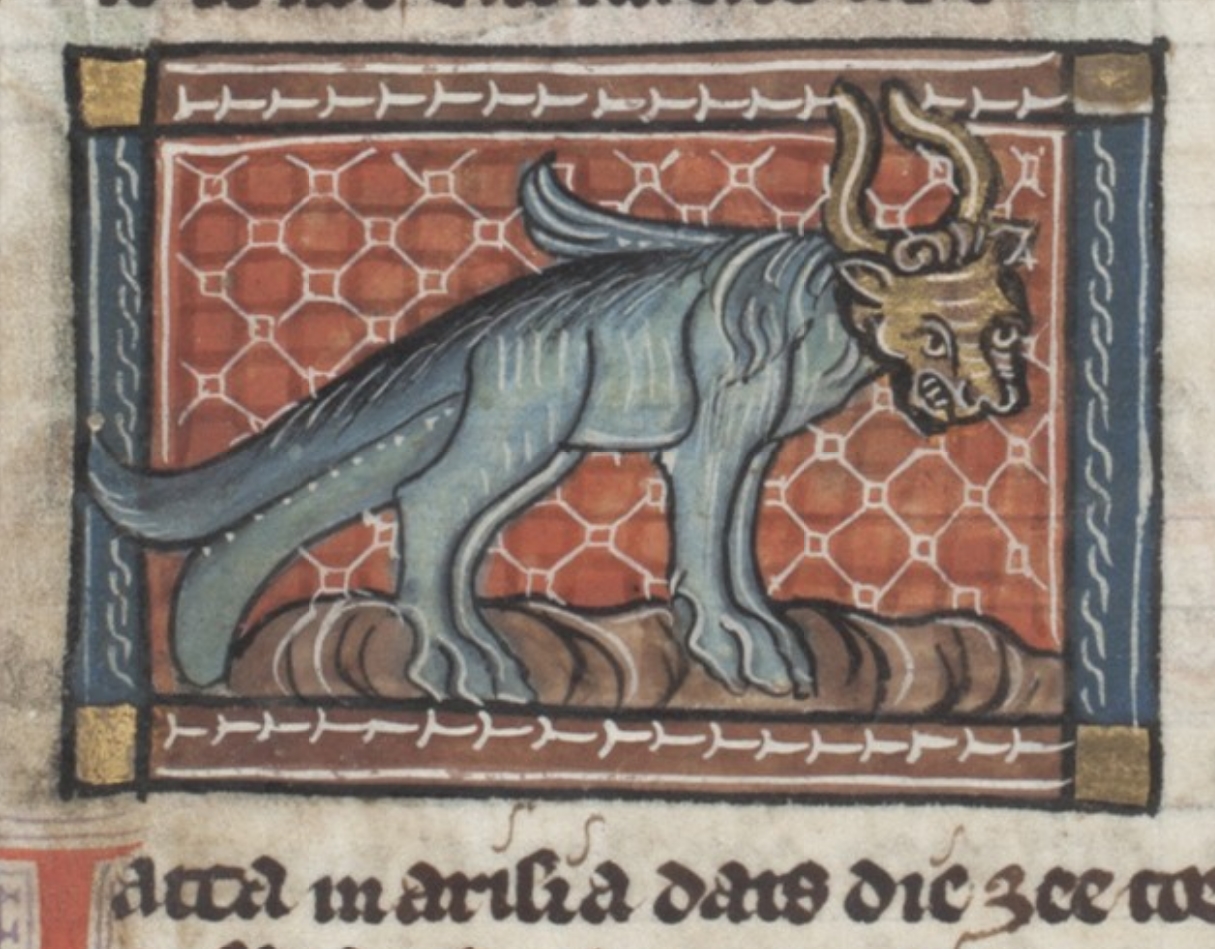
The leucrota is a composite animal, the result of a mating between a hyena and a lioness. It is the same size as an ass, but with a horse's head, chest and legs like a lion, hind quarters like a stag, and cloven hoofs. It has an extremely wide mouth, that stretches from one ear to the other. How a lion and hyena can produce horse-like offspring is not explained. In many illustrations the leucrota does not have any resemblance to either a lion or a hyena.


Mermaid
The mermaid (not to be confused with siren) has a woman's head and torso and a fish body below the waist. She is usually shown holding a mirror and a comb, both symbols of the sins of luxury and pride. The separation between the human and fish parts is always distinct; sometimes it looks like a woman wearing a fish costume. There are also mermen.
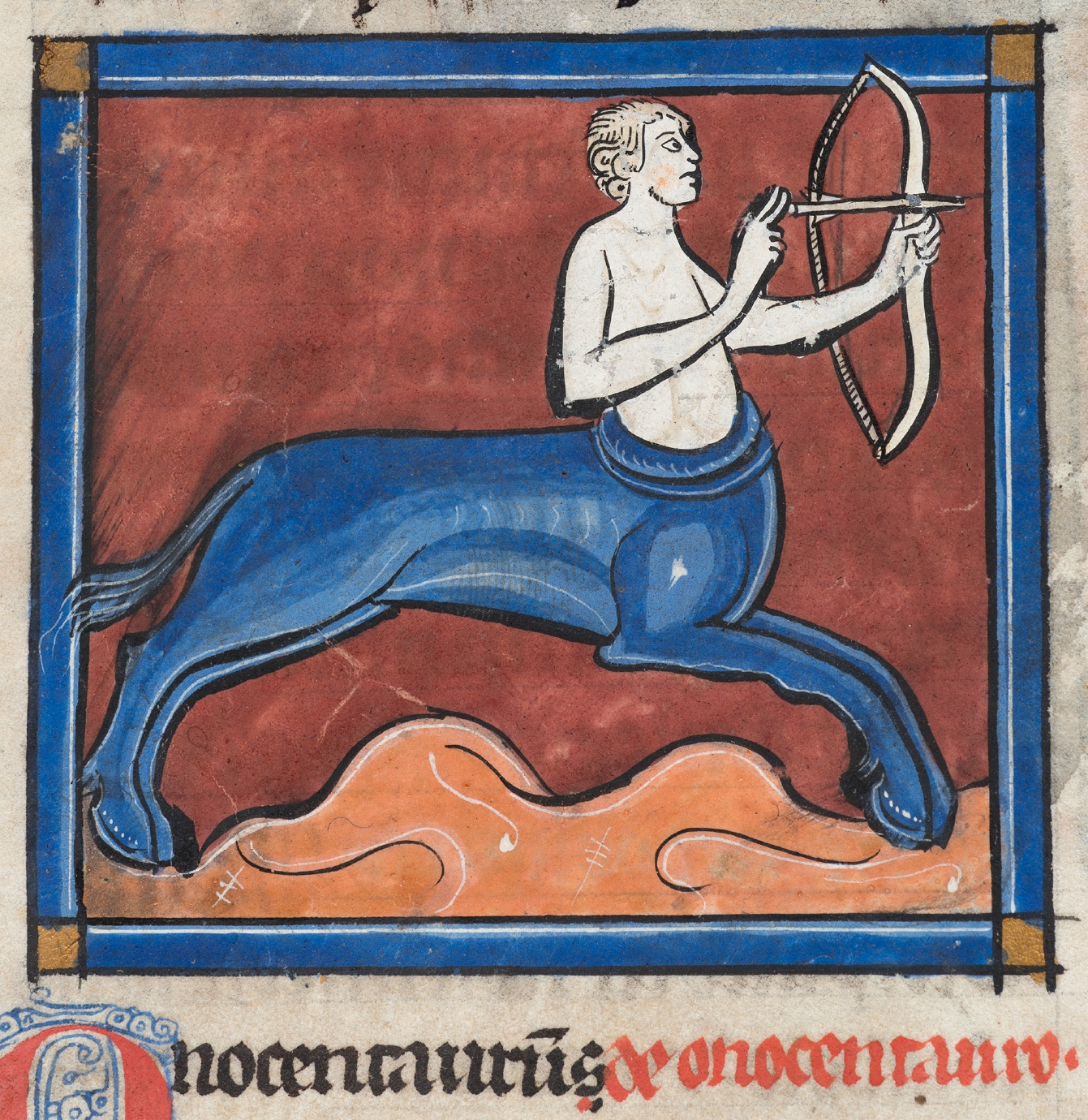
Onocentaur
The onocentaur is part human and part onager. It is often shown with a siren because they are both symbols of the sin of lust. There are two types, one the inverse of the other.
The first type of onocentaur is similar to the centaur, but where the centaur has the body of a horse, the onocentaur has the body of an onager (wild ass). There is almost always a distinct division between the human and onager parts, often shown as a thick roll of flesh. In some cases the onager part has only two hind legs with the human part perched awkwardly on top.
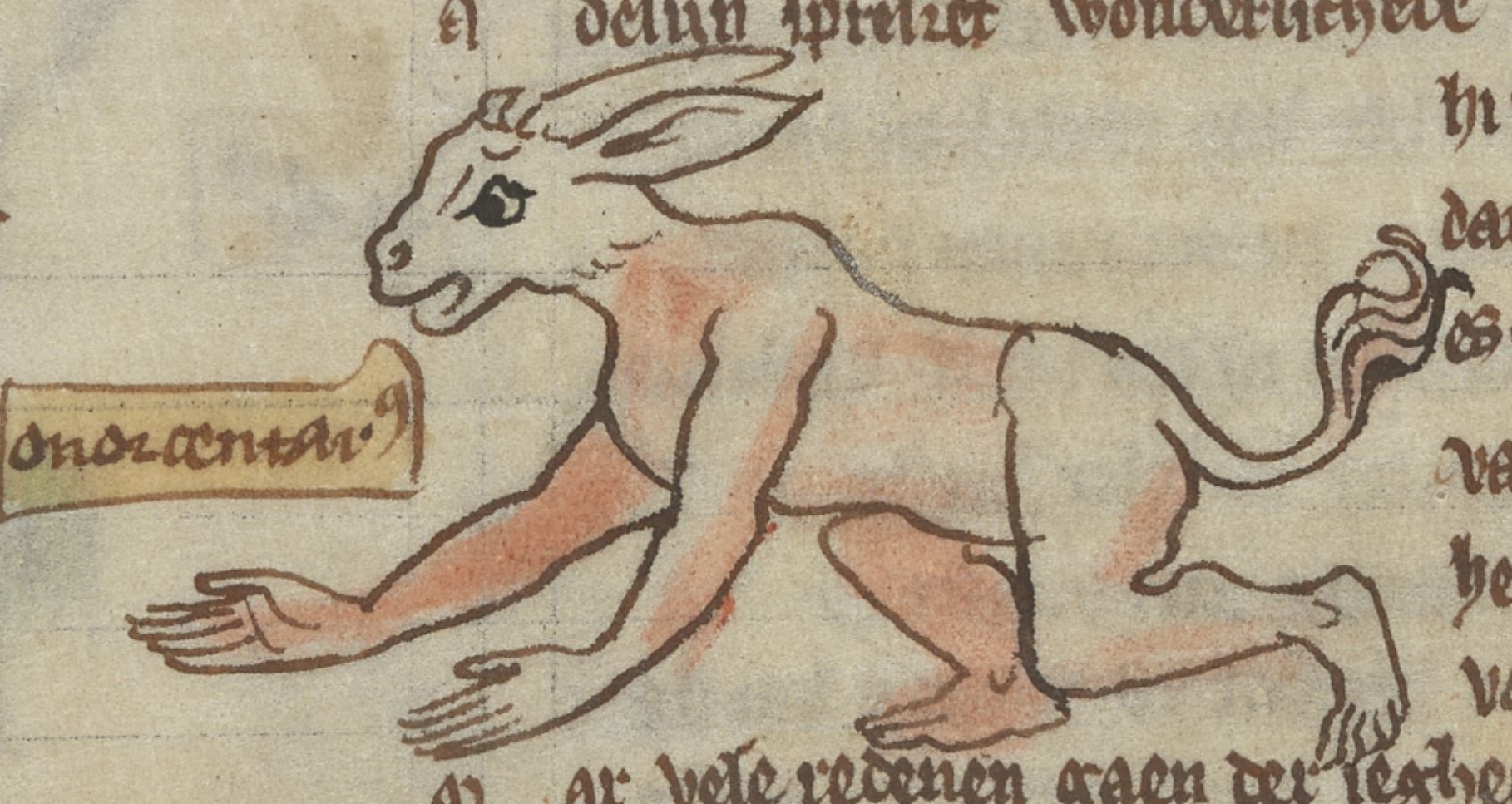
With the second type of onocentaur the human and onager parts are reversed: The beast has the head of an onager (wild ass) and the body of a human. The ass head is usually attached to the human neck with no no clear visible division between the two. The human part usually has a tail, but is otherwise fully human.



Siren
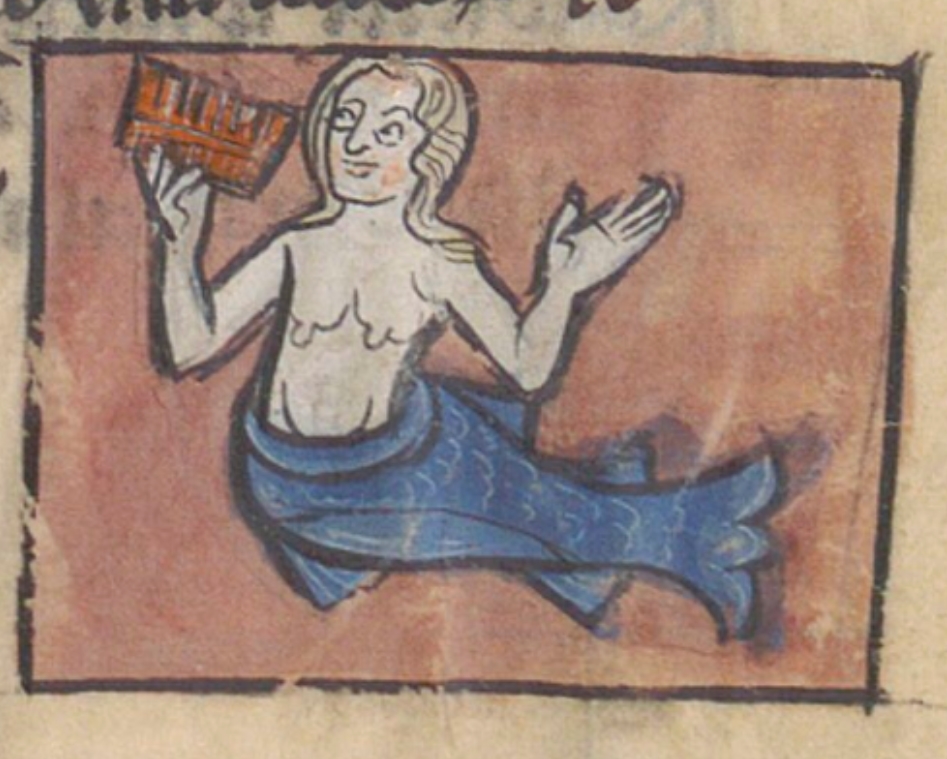
The siren (not to be confused with mermaid) is depicted in several forms. It is commonly shown holding a fish or a musical instrument or both, with a boat full of enchanted sailors nearby. There are three basic forms: part fish, part bird and a combination of fish and bird. The human part is usually a woman, but there are also male sirens. Siren illustrations often include the onocentaur; both are symbols of the sin of lust.
The first form has the torso of a woman to the waist, with a fish body and tail below. Sometimes the fish part has a two-part split tail. The division between the human and fish parts is distinct, with usually a belt or roll of flesh separating them; sometimes the human part appears to be wearing a fish costume.
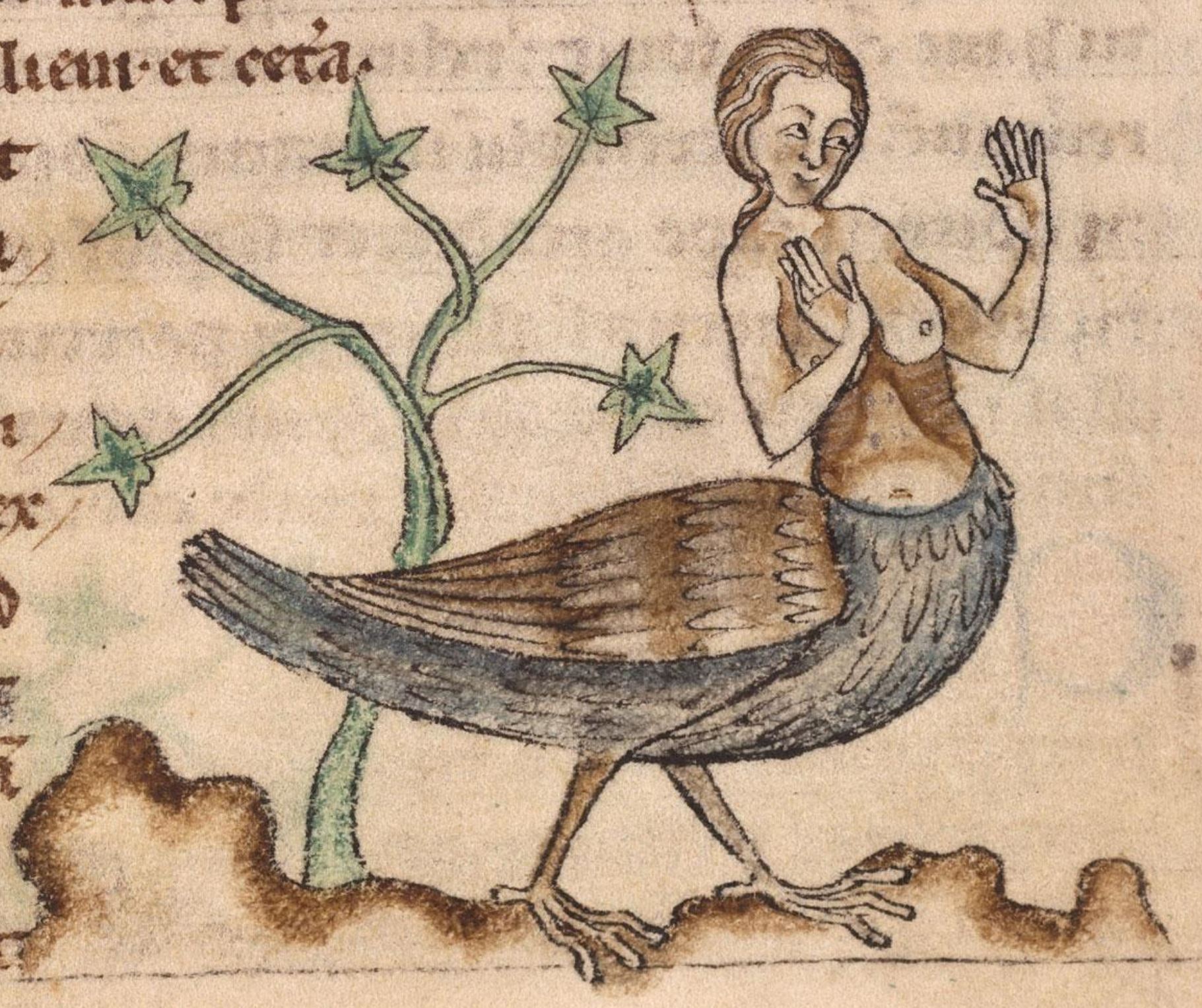
The second siren form also has the torso of a woman, but the lower half is a bird, usually with wings and bird legs.
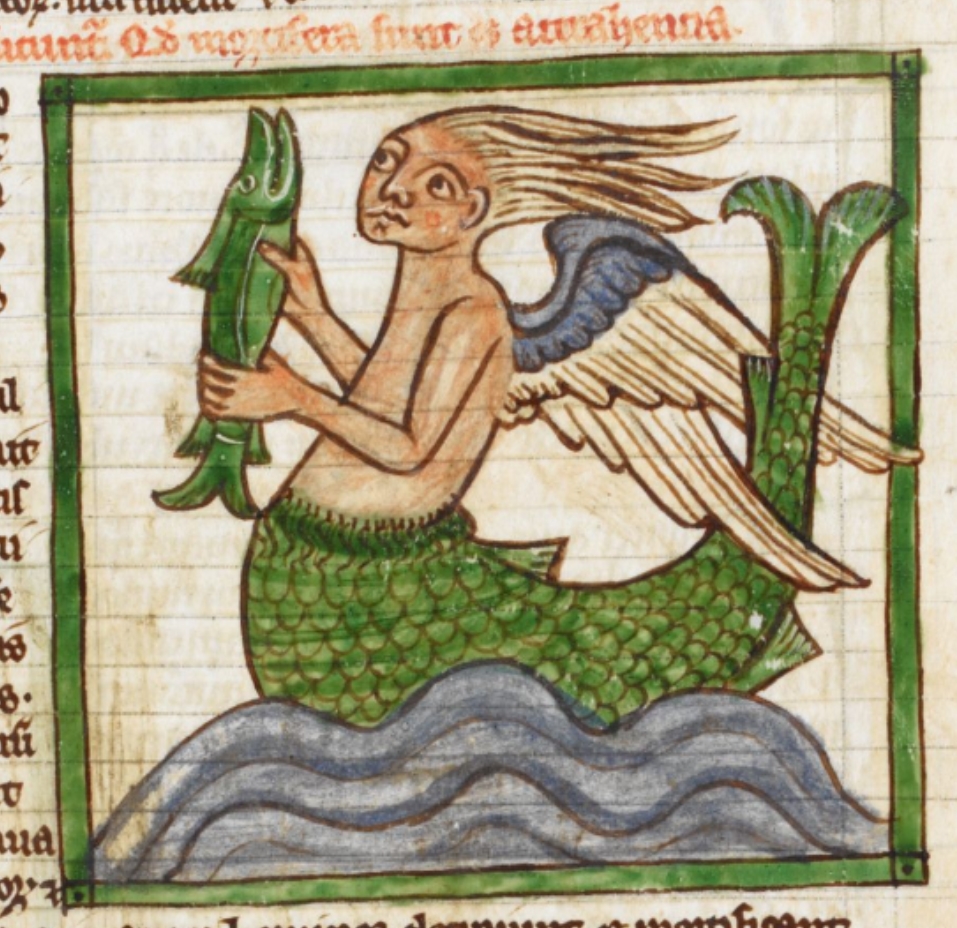
The third siren form is a combination of the first two: the torso of a woman with a fish below, but with bird wings and sometimes part of a bird body. The wings can be attached to human part or the fish part. In some cases sirens with fish bodies and ones with bird bodies are illustrated together.