Kingfisher
| Latin name: | Halcyon |
| Other names: | Alcedo, Alcion, Alcionibus, Alcyon, Alnon, Altion, Eisvogel, Isenbrado |
| Category: | Bird |
A bird that calms sea storms


General Attributes
At mid-winter, when the sea storms are strongest, the kingfisher lays its eggs in the sand on the shore. For seven days the kingfisher hatches the eggs, and for an additional seven days it nourishes them. During those fourteen days the sea remains calm, unnaturally for the season. Sailors know that during this time they will not be threatened by storms, and call this the "halcyon days" after the Latin name of the kingfisher, "halcyon".
Illustration
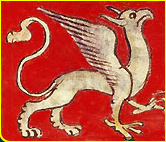
The illustrations of the kingfisher vary wildly, from fairly realistic depictions to strange long beaked birds. One common depiction shows a large, long-beaked bird with its head turned back so its beak is biting or touching its tail or wing feathers.
Reality
The modern association of the Latin name halcyon or alcyon with the kingfisher is probably based on the bird's family name Alcedinidae and subfamily name Halcyoninae. It is not clear whether the medieval "halcyon" is actually the modern "kingfisher".
The story of the kingfisher and its Greek sources are the origin of the term "halcyon days", usually referring to days in the past that were calm and happy.